
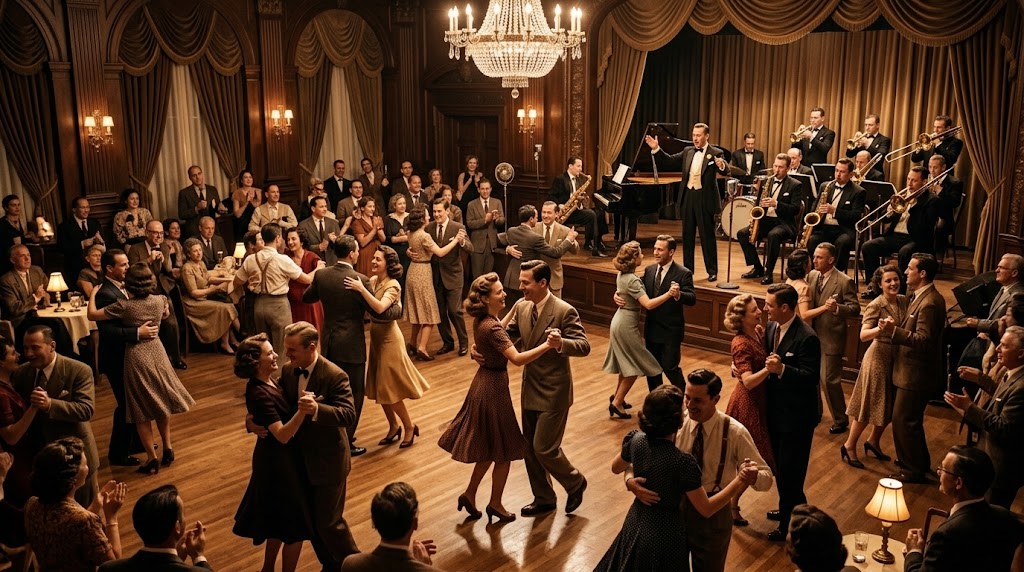
Some music invites people to sit quietly and listen. Swing makes that difficult. The moment a walking bass line settles beneath bright horns and a steady drum pattern, the room begins to change. Feet find the beat, shoulders loosen, and strangers start smiling at one another. That response explains why swing means more than nostalgia for vintage dance halls. It offers a lively way to experience music together, whether the setting is a crowded ballroom, a neighborhood festival, or an intimate jazz club.
The appeal comes partly from the relationship between movement and musicianship. A swing tune can feel relaxed without losing momentum, leaving dancers enough space to play with the rhythm. At the same time, a large jazz ensemble adds layers of color that reward anyone who prefers listening from a table. Audiences can follow a melody, notice a sudden burst of brass, or anticipate the return of a familiar refrain. Each perspective reveals something different, giving swing an unusual ability to entertain active participants and attentive listeners in the same room.
Why Swing Feels Different From Other Dance Music
Swing relies on a pulse that feels elastic rather than mechanical. Notes often lean forward or settle slightly behind the beat, creating a sense of motion that is both precise and playful. During the 1930s and 1940s, orchestras helped make this feeling central to popular dancing, filling ballrooms with music designed for social occasions. Yet the rhythm still works outside its original historical setting. People respond to the gentle push and pull almost instinctively, while experienced dancers use pauses, turns, and changes of direction to reflect the character of a particular song.
The Conversation Between Band and Audience
A lively swing performance is a conversation, even when no words are exchanged. Musicians watch the crowd for clues about the room’s energy, and dancers respond to the music as it unfolds. An extended chorus may encourage a few more couples onto the floor, while a softer passage gives everyone a chance to breathe. This connection becomes especially noticeable with a live big band. The players share glances, adjust their intensity, and shape phrases together. The result is more than a polished arrangement. It is a moment that cannot be repeated exactly.
What Gives a Swing Performance Its Spark
The excitement of a big band comes from contrast. A tune might begin with a small group stating the melody before the full orchestra enters with surprising force. Short musical answers can pass between instrumental sections, giving a familiar phrase fresh personality each time it returns. Skilled arrangers leave room for both restraint and celebration, knowing that a quiet measure can make the next bright chord more satisfying. Beneath these changes, the musicians maintain a shared rhythmic purpose. Three details are particularly important in turning a collection of excellent players into a performance that feels alive.
Rhythm That Makes Movement Feel Natural
The rhythm section is the quiet engine behind a crowded dance floor. Bass notes outline the harmony and keep the music moving, while drums bring texture through cymbals, snare accents, and subtle changes in emphasis. Piano or guitar chords fill the spaces without overwhelming the pulse. When these parts fit together, dancers do not need to count every beat consciously. They can listen, react, and enjoy the company around them. The finest rhythm sections also know when to hold back, allowing the music to breathe instead of pushing every phrase with equal intensity.
Brass and Reeds That Carry the Excitement
Trumpets, trombones, and saxophones give a swing orchestra much of its personality. A trumpet section can announce a chorus with brilliant clarity, then step aside as the saxophones introduce a warmer melody. Trombones may add weight to a dramatic entrance or soften their tone beneath a singer. The real pleasure comes from hearing these voices interact, rather than treating every instrument as a separate attraction. A simple melody can travel through several sections and sound transformed on each return. This constant exchange keeps ears engaged even when the underlying rhythm stays comfortably familiar.
Solos That Keep Every Performance Fresh
An improvised solo offers a glimpse into a musician’s imagination. Within the structure of the tune, a saxophonist might stretch a phrase, quote a familiar melodic idea, or build tension through a series of short statements. The rest of the band listens and responds, sometimes with a gentle chord and sometimes with a sharp accent that sparks another idea. Dancers often respond to these surprises as well. Because the solo grows from the moment rather than following a fixed script, two performances of the same arrangement can have noticeably different moods.
The Place of Swing in Music Today
Swing continues to find a home wherever people value music as a shared experience. Community orchestras, student jazz programs, social dance gatherings, and professional ensembles all offer different ways to encounter its rhythms. New listeners may arrive because they enjoy vintage style, but many stay for the warmth of a real band playing in front of them. Others discover that swing dancing welcomes creativity without demanding perfection. Its continued appeal does not depend on recreating the past exactly. It comes from a simple pleasure that still feels current: hearing musicians connect and finding your own place in the rhythm.